
PeekABook
A phygital storytelling platform that connects children and older relatives through a physical RFID board and a digital video application — designed to sustain intergenerational bonds across distance.
When isolation made connection a design problem.
PeekABook was conceived during the COVID-19 pandemic — a period defined by physical distancing, social isolation, and heightened anxiety, particularly for vulnerable groups such as young children and the elderly. As families increasingly turned to digital solutions to stay in touch, it became clear that most existing tools failed to provide a truly engaging and meaningful way to connect across generations.
The challenge was not just communication: it was creating a shared experience. PeekABook was developed as an interactive storytelling platform that enhances and sustains intergenerational bonds through a combination of physical and digital interactions — turning a video call into a co-authored story.
One story, two interfaces.
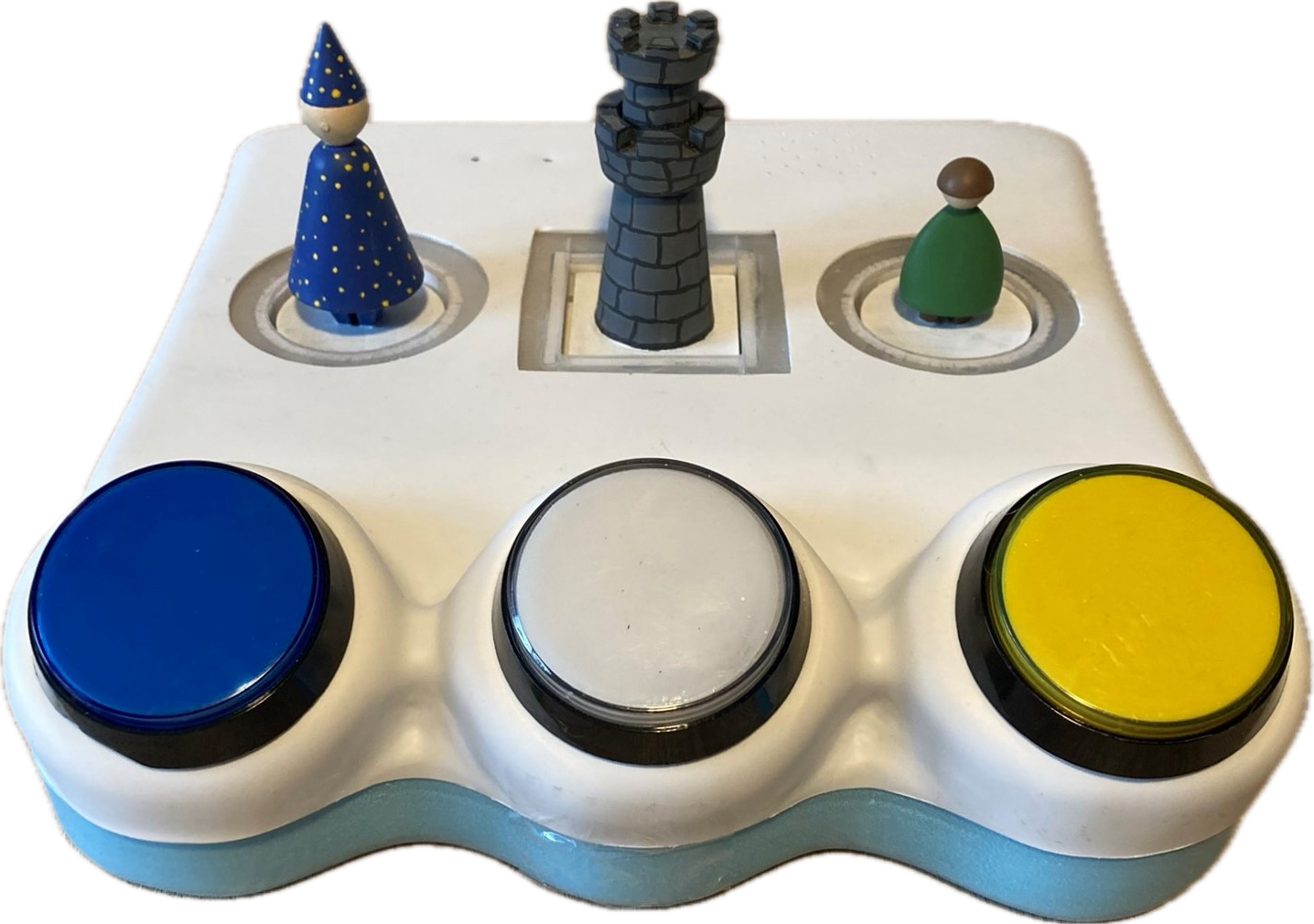
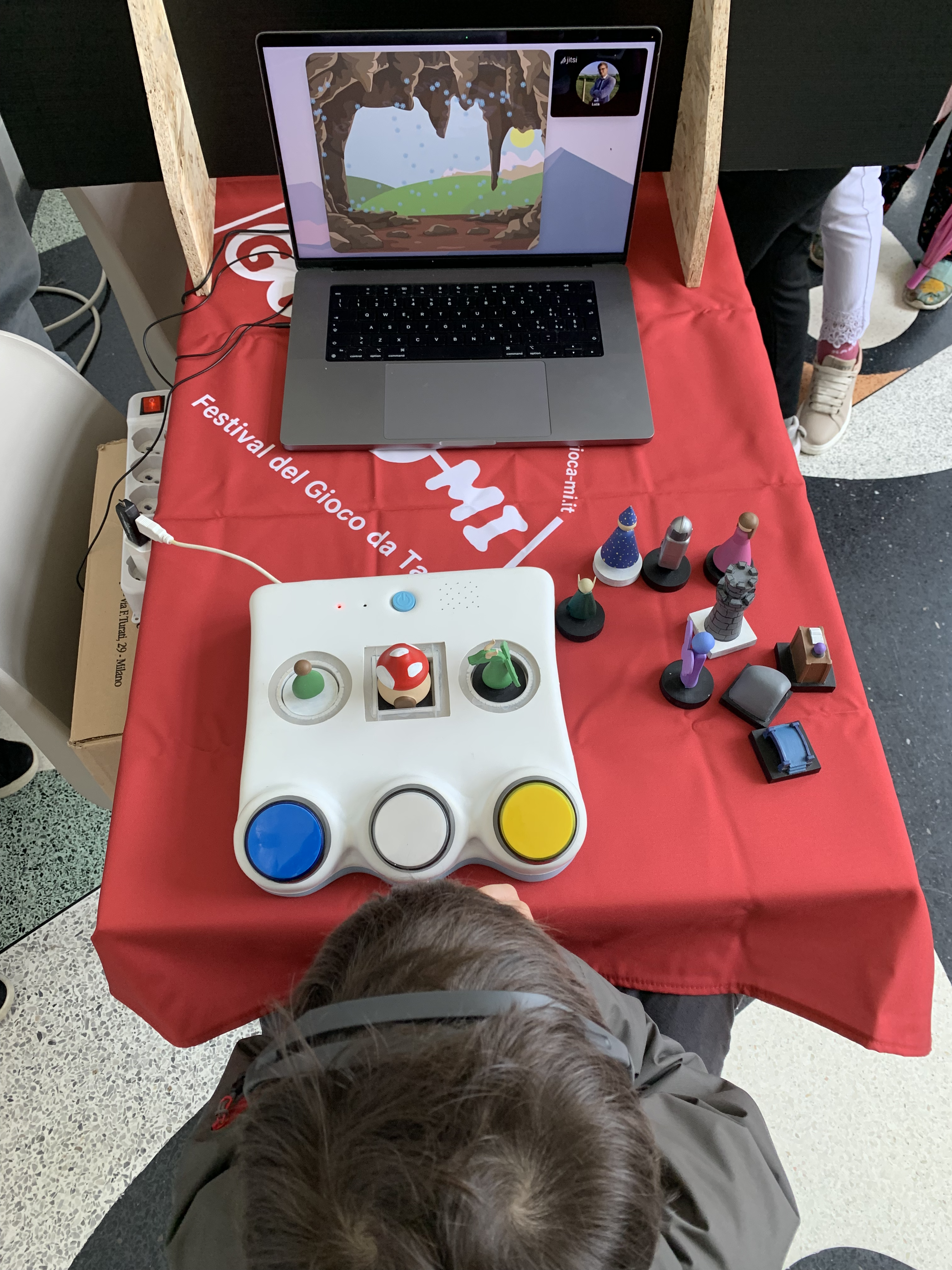
PeekABook comprises two primary components. The child uses a physical board equipped with RFID-enabled figurines: tangible characters and settings they can place on designated slots to build the story. The older relative — a grandparent or another family member — accesses a web-based application that mirrors the child's selections in real time and provides audiovisual storytelling support, along with two-way video communication.
Each change the child makes on the board is instantly reflected on the narrator's interface. The board provides audio-visual feedback to confirm every interaction, and LED indicators signal connection status — making the digital layer tangible and legible even for young users.
From pairing to shared narrative.
The child powers on the board, which enters pairing mode. The narrator accesses the web interface, logs in, and selects or registers the listener. If the connection is new, the board displays an emoji-based pairing code the narrator must enter. Once linked, the video call activates and LED indicators confirm the connection.
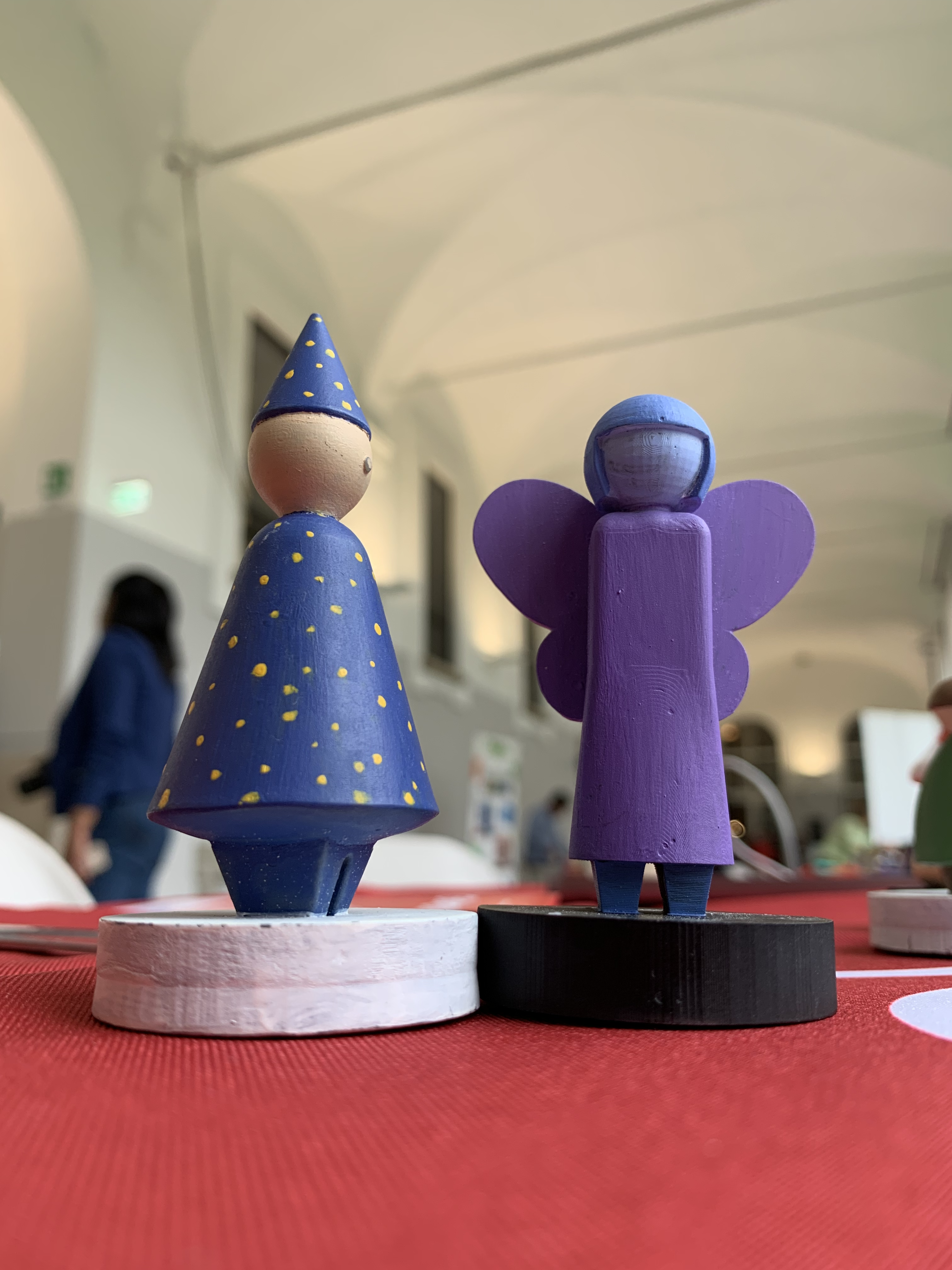
The child picks figurines — characters or settings for the story — and places them on designated slots. The board reads each RFID tag, mirrors the selection on the narrator's interface, and confirms each choice through audio-visual feedback.
The narrator takes the lead: constructing the narrative, introducing audio-visual effects, and posing multiple-choice questions. The child responds by pressing one of three color-coded buttons on the board, influencing the story's direction.
The child can introduce new figurines at any point during the session. Each new placement is detected by the board and prompts the narrator to integrate it into the ongoing story — keeping the interaction fluid and child-driven.
From physical signals to shared screens.
- ESP32-based microcontroller (Lolin D32)
- RFID readers + figurines with embedded tags
- LED indicators for real-time feedback
- Color-coded input buttons
- Rechargeable battery for portability
- C++ firmware (PlatformIO) — RFID/button input + network communication
- Java/Spring backend — RESTful APIs + WebSocket for real-time sync
- Vue.js frontend — narrator interface with storytelling tools and video
An annual board game festival as a testing ground.
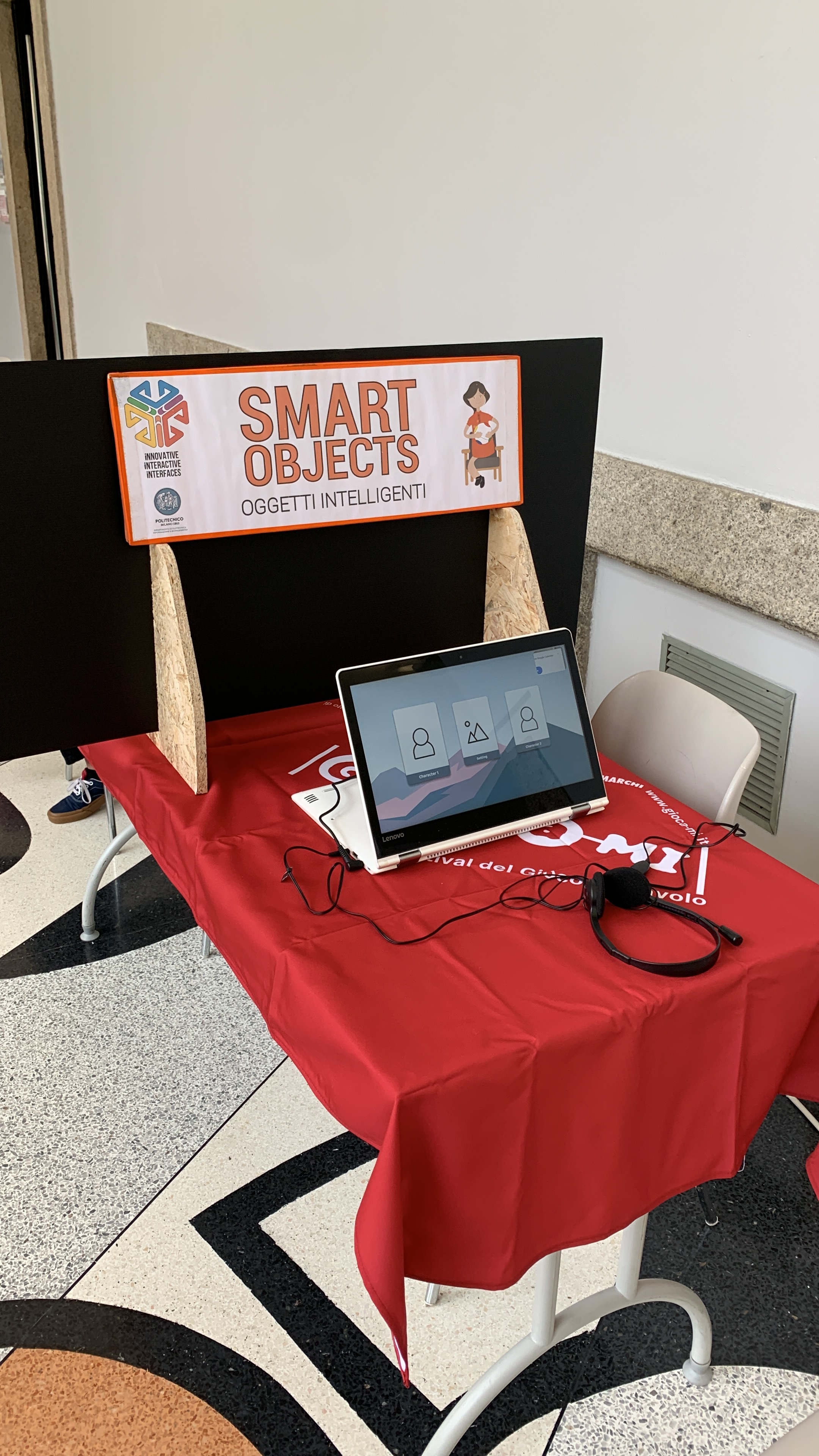
The user study was conducted at GiocaMi, an annual board game festival held at the Palazzo delle Stelline in Milan — jointly organized by the De Marchi Foundation and the Regional School Office for Lombardy. The event attracted families, educators, and exhibitors, providing an ideal context to observe real-world interactions with the PeekABook prototype, despite the distractions typical of large public events.
48 sessions were scheduled over an eight-hour period (96 attendees in total). Due to the festival's dynamic nature, 40 participants completed the full testing phase: 32 children aged 5–14 and 8 adults above 14. Listener and narrator were placed at opposite ends of a 1.5-meter table, separated by visual partitions and wearing headphones — to simulate a remote communication context. Each session lasted a maximum of 10 minutes.
Data was collected through three instruments: the System Usability Scale (SUS) for adults; a simplified six-item User Experience Scale (UES) with visual icons for children; and a Net Promoter Score (NPS) administered to both groups. Researchers also conducted naturalistic observation, documenting successful outcomes, errors, confusion moments, and unexpected system use.
Children loved it. Adults needed more guidance.
Children's UES scores averaged 4.2/5 — with activity enjoyment rating highest at 4.6/5. Adults rated system usability at 70.5 SUS, above the acceptability threshold, but the NPS divergence (children +65, adults −25) pointed to a clear gap: the system engaged its youngest users far more than it supported its adult ones.
Four friction points that shaped the next iteration.
Large colored buttons on the board drew immediate focus, but caused frustration when no actions were triggered at inappropriate points in the narrative. Affordances need to be temporally contextualized, not permanently visible.
Children often needed adult permission to add new figurines or change settings, limiting independent exploration and occasionally inducing boredom. Figurines were also meant to stay in position, reducing ongoing interaction opportunities.
The system provided broad storytelling guidelines but no clear sequence of stages (incipit, development, conclusion). Adults struggled to form coherent narratives, and children waited passively — ultimately hindering engagement for both.
Figurines were designed as recognizable characters, leaving minimal room for imaginative interpretation. Less visual specificity might encourage greater creativity and allow children to project their own meanings onto the elements.
Two Master's theses that grew from PeekABook.
The GiocaMi study highlighted PeekABook's potential for remote engagement while illuminating key areas — emotional expression, narrative clarity, physical interactivity — where further research could meaningfully improve design and usability. Two members of the PeekABook team developed their Master's theses from these findings, each supervised by me.
Expands PeekABook's premise into a healthcare setting, where children face heightened emotional and psychological challenges. Minimito integrates reimagined wooden figurines, hospital-themed narratives, and an adaptable interface that resonates with medical procedures. Children use the figurines to visualize and articulate their feelings — transforming passive worry into active, imaginative storytelling.
Prioritizes the educational and cognitive dimensions of interactive storytelling. Drawing on PeekABook trial data, Storiello advances the original concept through a board-game style format and a more robust narrative architecture. In-depth usability testing examines how children move between tangible and digital components, revealing the pedagogical benefits of blending hands-on play with guided storytelling prompts.